
Needles — Precision & Flow

High-quality, sterile needles designed for precise reconstitution and administration workflows. Manufactured to ISO 13485 standards, ensuring minimal friction and optimal fluid flow. Shipped same-day from Stockholm across the EU.

Showing 4 products· EU shipping

Filters
Filters
Gauge
Volume
  • N/A
Pack size
 149.00
In stock
 149.00
In stock
Video tutorial · 4 min

Selecting the appropriate gauge

The gauge of a needle determines its thickness and application. A thicker draw needle (e.g., 18G) is essential for penetrating dense vial stoppers and rapid reconstitution, while ultra-fine needles (e.g., 30G) are designed for precision, reducing tissue trauma and maximizing comfort.

Produced in collaboration with research laboratory professionals.

Watch · 4:30

Why ThePeptideKit

All our syringes are CE-marked and ISO 13485 manufactured. Same-day dispatch from Stockholm before 14:00 CET. Returns within 14 days under EU consumer law (customer covers return shipping).

EU shipping
Same-day dispatch
14-day returns
CE-marked

Compare needle types

Often paired with needles

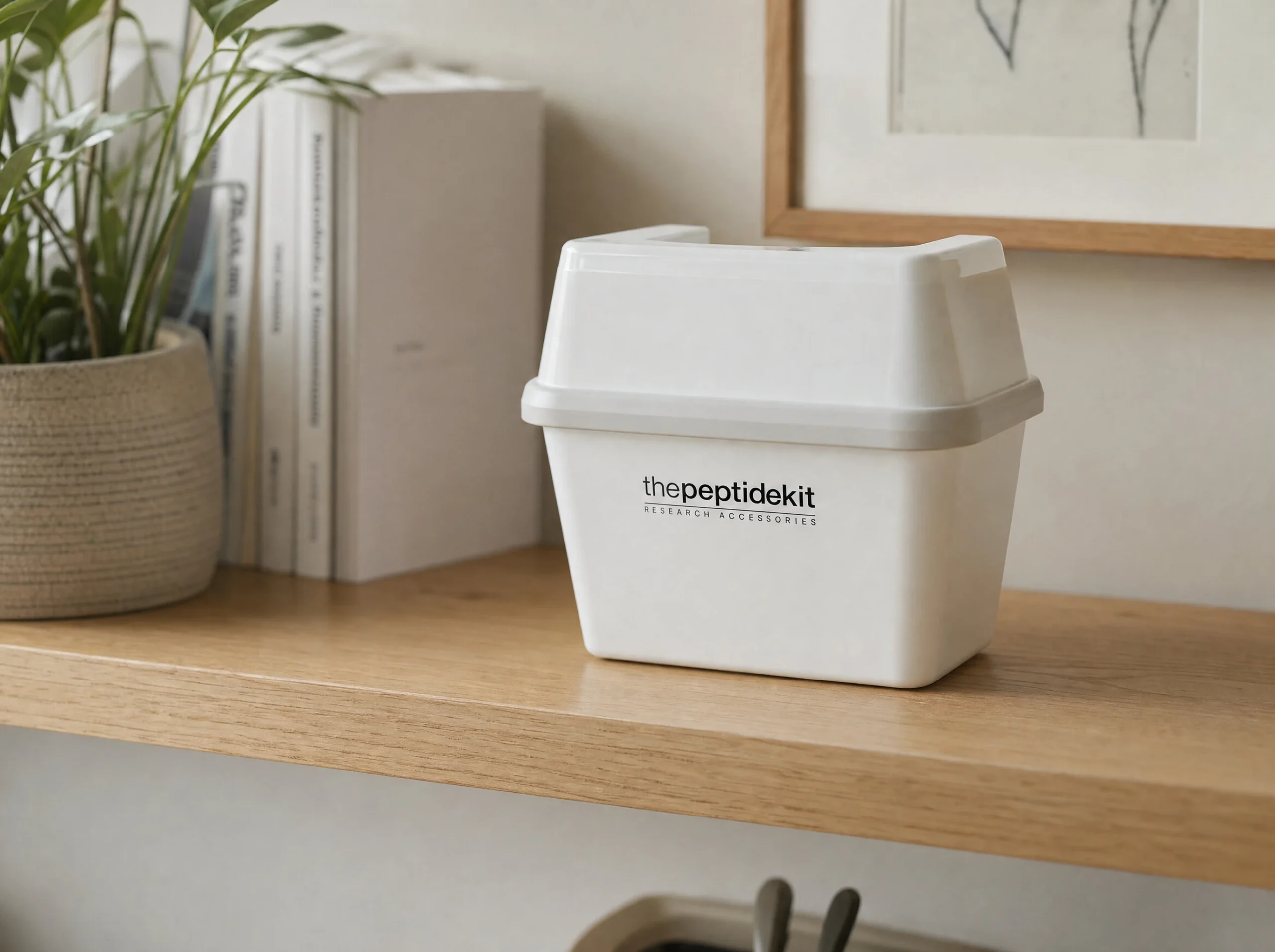
The complete starter setup — 100 × 31G PRO syringes, storage, prep and disposal.
Original price was: € 109.00.Current price is: € 89.00.
In stock

2-litre white sharps container with secure rotating lid.
Price range: € 8.00 through € 31.00
In stock

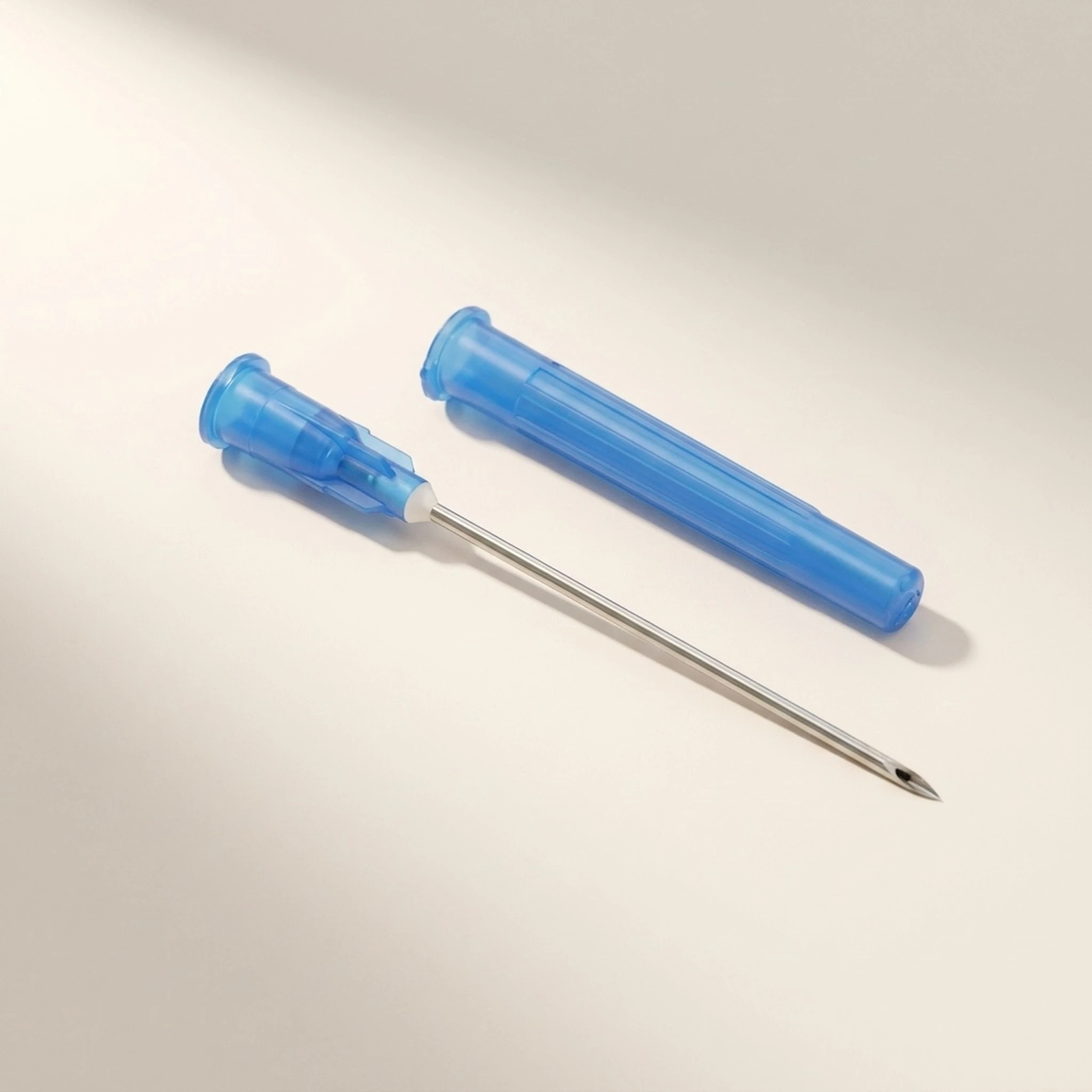
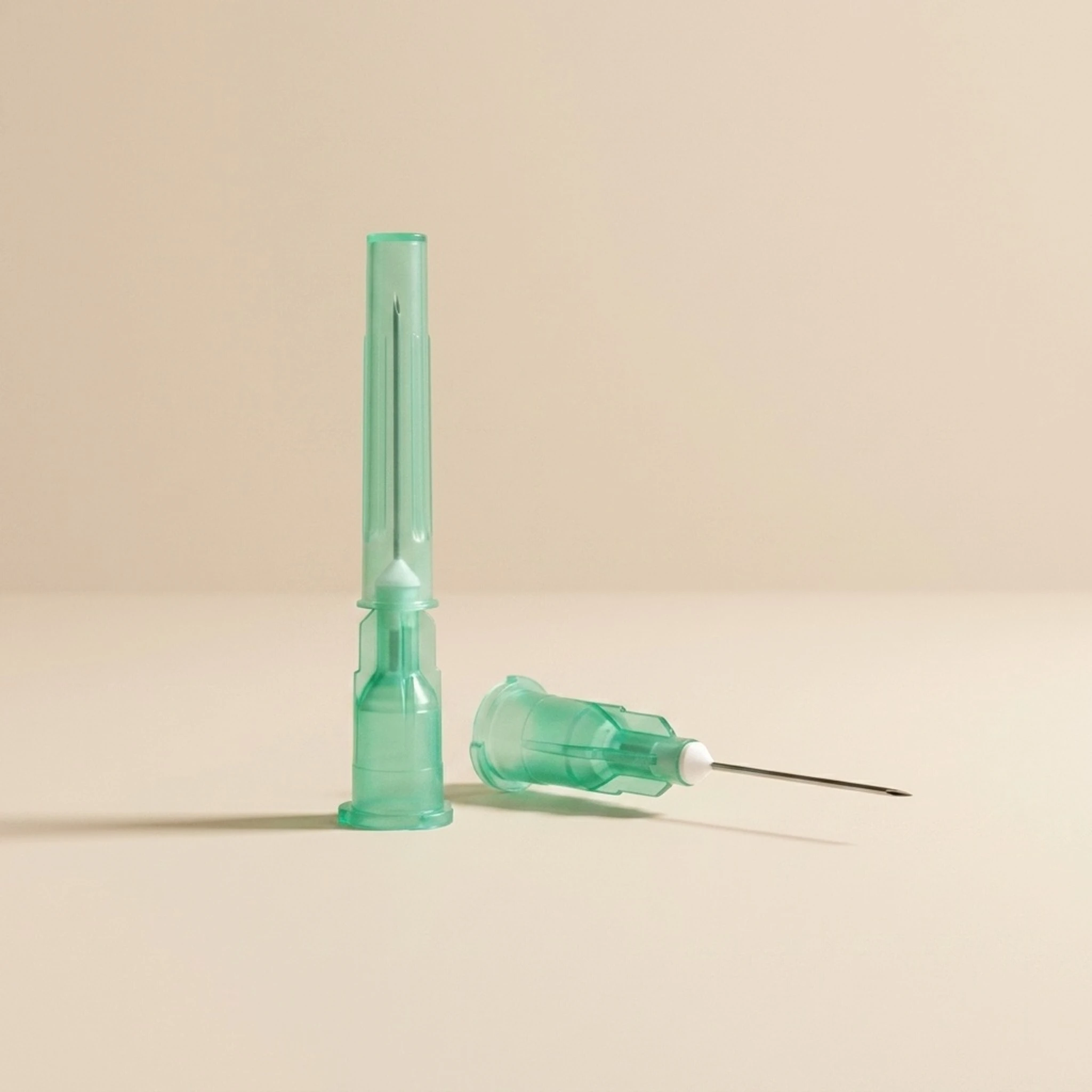
21G × 25mm draw needle for pulling solution from vials. Luer fitting.

Price range: € 2.50 through € 13.00
In stock

Individually wrapped 70% isopropyl swabs. 100-pack.

 3.50
In stock

Frequently asked questions about needles

Common questions from researchers · Updated May 2026

What is the difference between 30G and 31G PRO insulin syringes?
The number indicates needle gauge — counter-intuitively, higher gauge numbers mean thinnerneedles. 30G is the standard for most research workflows. 31G — our flagship HERO line — gives noticeably reduced discomfort and is the thinnest gauge available in 6mm length All three use 0.5ml or 1ml barrels with U-100 markings. See our full gauge comparison.
What size insulin syringe do I need?
For most laboratory workflows, a 0.5ml insulin syringe with U-100 markingsis standard. Volume choice depends on dose: 0.5ml gives finer precision (1 unit ≈ 0.01ml); 1ml is better for larger volumes. Gauge depends on comfort preference — 31G PRO is the popular middle ground for research workflows.
How do you read an insulin syringe?
Insulin syringes use U-100 markings, where each small line represents 1 unit of U-100 insulin (which equals 0.01ml of volume). A 50-unit line corresponds to 0.5ml; a 100-unit line to 1ml. Always read the syringe at eye level with the needle pointing up, and check that the bottom of the plunger seal aligns with the target unit line.
What does U-100 mean on a syringe?
U-100 means 100 units per millilitre. It's the international standard for insulin syringes. The markings let you measure doses by unit count rather than by volume, which simplifies fractional dose calculations.
What is the difference between 1ml and 0.5ml insulin syringes?
The barrel holds twice the volume in a 1ml syringe. Both use the same U-100 markings, but the 0.5ml syringe spaces them out further along the barrel, giving you finer measurement precisionfor small doses. For research workflows requiring dose accuracy below 25 units, 0.5ml is recommended. For larger volumes (50–100 units routinely), 1ml is more practical.
What is a 31G PRO syringe?
31G PRO is our flagship 0.5ml insulin syringe with a 31-gauge × 6mm needle — the thinnest gauge available in this length on the European market. It uses a specially-coated needle for minimum penetration force, making it the preferred option for daily laboratory workflows. Pack sizes: 10, 30, 100.
How do I dispose of used insulin syringes?
Used syringes must nevergo in regular waste. Use a CE-marked sharps disposal container. When full, the container is sealed and disposed of according to local medical waste regulations — most EU countries provide drop-off points at pharmacies or municipal collection sites. We sell CE-marked 2.0L sharps containersfor in-lab disposal.
Can I reuse an insulin syringe?
No. Insulin syringes are single-use sterile devices. Reusing them risks contamination, needle dullness, and inaccurate dosing due to deformed graduations. Each syringe in our packs is individually wrapped to maintain sterility until use.
Are these syringes CE-marked?
Yes. All syringes in our catalog are CE-marked Class IIa medical devices, ISO 13485-manufactured. CE documentation and certificates of analysis are available on request for institutional buyers — contact our team.
What is a luer lock syringe used for?
Luer lock syringes (3ml or 5ml) feature a threaded connector that locks onto a separate draw needle — typically a 23G or 21G — for reconstitution from vials. They're the standard for laboratory reconstitution workflows where the integrated needle on insulin syringes isn't appropriate (e.g., when drawing thick solvents through a stopper). See our luer lock syringesor the insulin vs luer lock comparison.
Where can I buy insulin syringes online in Europe?
ThePeptideKit ships CE-marked insulin syringes across the EU from our Stockholm warehouse — same-day dispatch on orders before 14:00 CET. We have localised stores at .se, .de, .fr, .nl, plus eight other European country domains. All payments and VAT handled per local rules.
Do you ship insulin syringes to the UK?
Yes, we ship to the UK from our Stockholm warehouse via DHL Express. UK orders require a £140 minimumdue to post-Brexit customs handling. Shipping is 199 SEK flat-rate. VAT is zero-rated on export; UK import VAT is collected at the border. See our shipping pagefor details.
Are these syringes for human use?
No. ThePeptideKit sells research accessories only. Our products are CE-marked medical devices intended for laboratory research workflows. We do not sell peptides, prescription medications, or any pharmaceutical products. See our compliance statement.
What is a low dead space syringe?
Low dead space (LDS) refers to syringe + needle designs that minimise the residual volume left behind after the plunger is fully depressed. Standard insulin syringes already have very low dead space because the needle is integrated into the barrel. This is critical for research workflows where accurate dosing of small volumes matters — typically less than 0.5 microlitres of waste per dose with our 31G PRO line.

About our needles

ThePeptideKit's insulin syringe catalog covers gauges 30G and 31G PROwith 0.5ml U-100 barrels. Every syringe is individually wrapped, sterile, single-use, and CE-marked Class IIa.

Choosing the right gauge

Insulin syringes use U-100 markings and an integrated needle, giving you maximum dose precision in small volumes. 30Gis the most widely used standard. 31G PRO— our flagship line — offers the thinnest needle available in 6mm length for minimum discomfort.

Pack sizes and pricing

Our insulin syringes come in 10-pack, 30-pack, and 100-pack quantities. The 100-pack offers the best per-unit price for established workflows; the 10-pack is ideal for first-time orders or evaluation. All packs ship in tamper-evident outer packaging.

Compatibility and certifications

All syringes are manufactured in ISO 13485-certified facilities and CE-marked Class IIa. CE certificates and certificates of analysis are available on request for institutional buyers.

Related accessories