
How to Store Peptides: The Complete Storage Guide
Temperature, light, duration — everything you need to know about keeping lyophilized and reconstituted research peptides stable.
ThePeptideKit Research Team
Peptides are sensitive molecules. Improper storage can degrade them within days — or even hours under the worst conditions. This guide covers everything from lyophilized storage to reconstituted vial protocols, with temperature ranges, light exposure considerations, and travel logistics for research workflows.
Why storage matters
Peptides are short chains of amino acids held together by peptide bonds. These bonds are vulnerable to several degradation pathways: hydrolysis (water-mediated cleavage), oxidation (especially of methionine and cysteine residues), and aggregation (peptides clumping into inactive complexes). Each is accelerated by temperature, light, and improper pH.
The good news: stored properly, lyophilized peptides remain stable for years. The bad news: stored improperly, even a few hours can render them useless for research workflows requiring quantitative accuracy.
Note
This guide is for laboratory research workflows. It does not provide medical advice or treatment protocols. ThePeptideKit does not sell peptides — only research accessories.
Lyophilized vs reconstituted
Peptides exist in two states relevant to storage: lyophilized(freeze-dried powder, as shipped) and reconstituted(dissolved in bacteriostatic water or sterile diluent). The storage requirements are radically different.
Lyophilized peptide storage
Lyophilized peptides are remarkably stable. The freeze-drying process removes nearly all water, slowing hydrolysis to a crawl. The peptide is locked in a glassy, amorphous solid that resists degradation.
Reconstituted peptide storage
Once water is added, the clock starts ticking. Hydrolysis, oxidation, and microbial contamination all become possibilities.
Temperature ranges
Storage temperature reference table
Light exposure
Many peptides are photosensitive. UV light in particular catalyzes oxidation of aromatic amino acids (tyrosine, tryptophan) and disulfide bonds. Store peptides in opaque containers— amber glass vials, foil-lined boxes, or dedicated storage cases that block light.
Tip
A 9-slot Pro vial case with foam insert serves two purposes: organization and complete light protection. The closed case ensures vials are never exposed to ambient light during normal handling.
Duration guidelines
The duration figures above are conservative estimates assuming proper temperature and light control. Before each use, inspect the vial for clarity, color, and particles. Any visible particulates or color change is a hard stop — discard the vial.
How to store lyophilized peptides — step by step
Procedure: 5 steps
Travel and transit with peptides
Maintaining cold chain during travel is challenging but feasible with the right accessories. For short transit (under 24 hours), an insulated travel pouch with a pre-frozen gel pack will keep vials between 4-10°C. For multi-day travel, a portable mini-fridge with 12V DC capability and a battery backup is the only reliable option.
If you're , all reconstituted vials must be in carry-on luggage with a doctor's note for amounts over 100ml per container. Hold luggage is exposed to extreme temperature variations that can destroy peptides.
Travel storage options compared
| State | Temperature | Duration | Container |
|---|---|---|---|
| Lyophilized, long-term | -20°C freezer | 2-3 years | Opaque vial case |
| Lyophilized, medium-term | 2-8°C fridge | 12-18 months | Opaque vial case |
| Lyophilized, short-term | ≤25°C room temp | 30-60 days | Opaque vial case |
| Reconstituted, BAC water | 2-8°C fridge | 14-30 days | Original vial |
| Reconstituted, sterile water | 2-8°C fridge | 24-72 hours | Original vial |
Common storage mistakes
How to tell if a peptide has gone bad
Inspect every vial before use:
Important
If you suspect a peptide has been improperly stored — temperature excursion, light exposure, contamination — discard it. The cost of wasted research time from using a degraded peptide far exceeds the cost of replacement.
Storage essentials mentioned in this guide
CE-marked storage accessories from our catalog
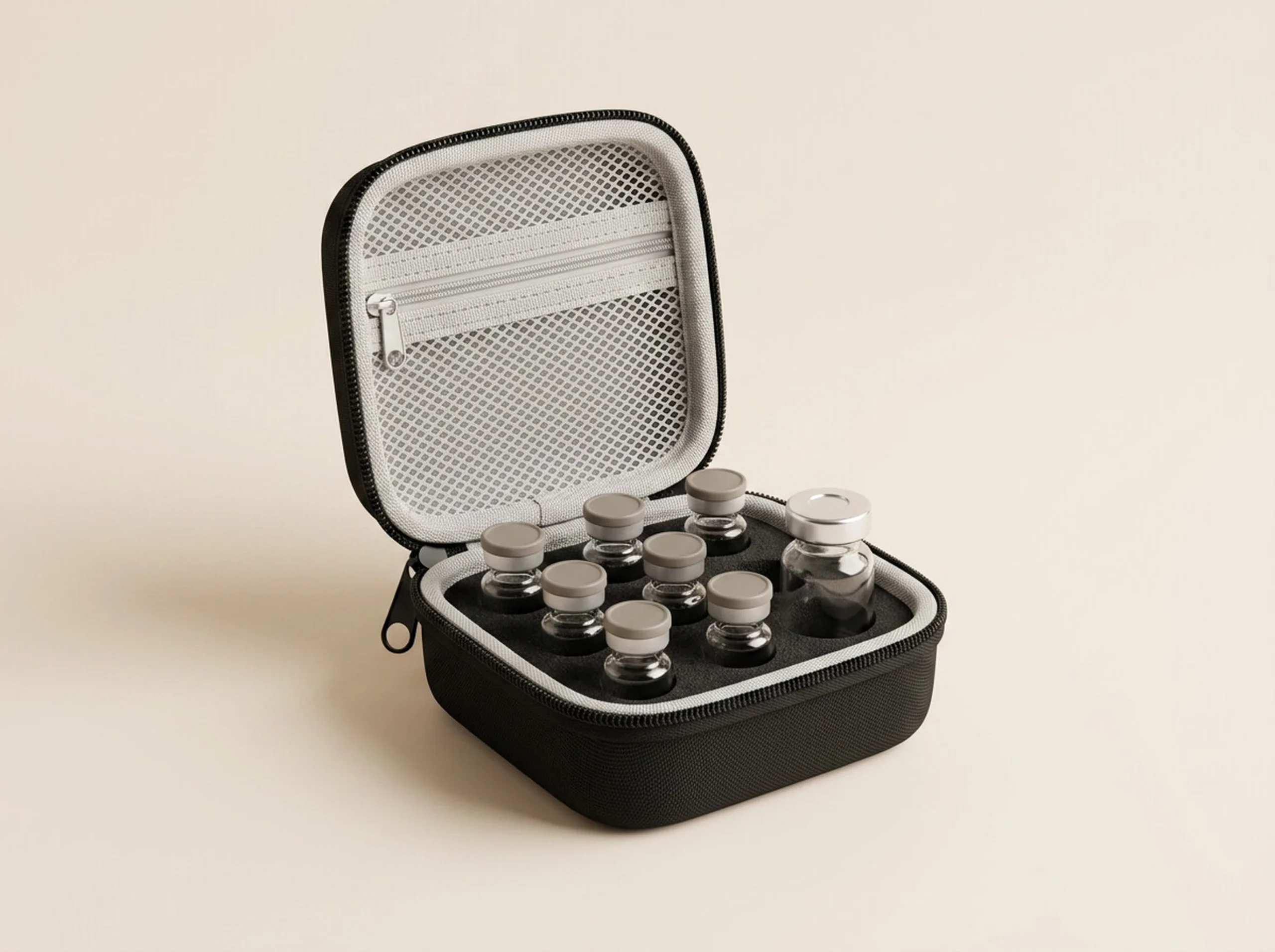
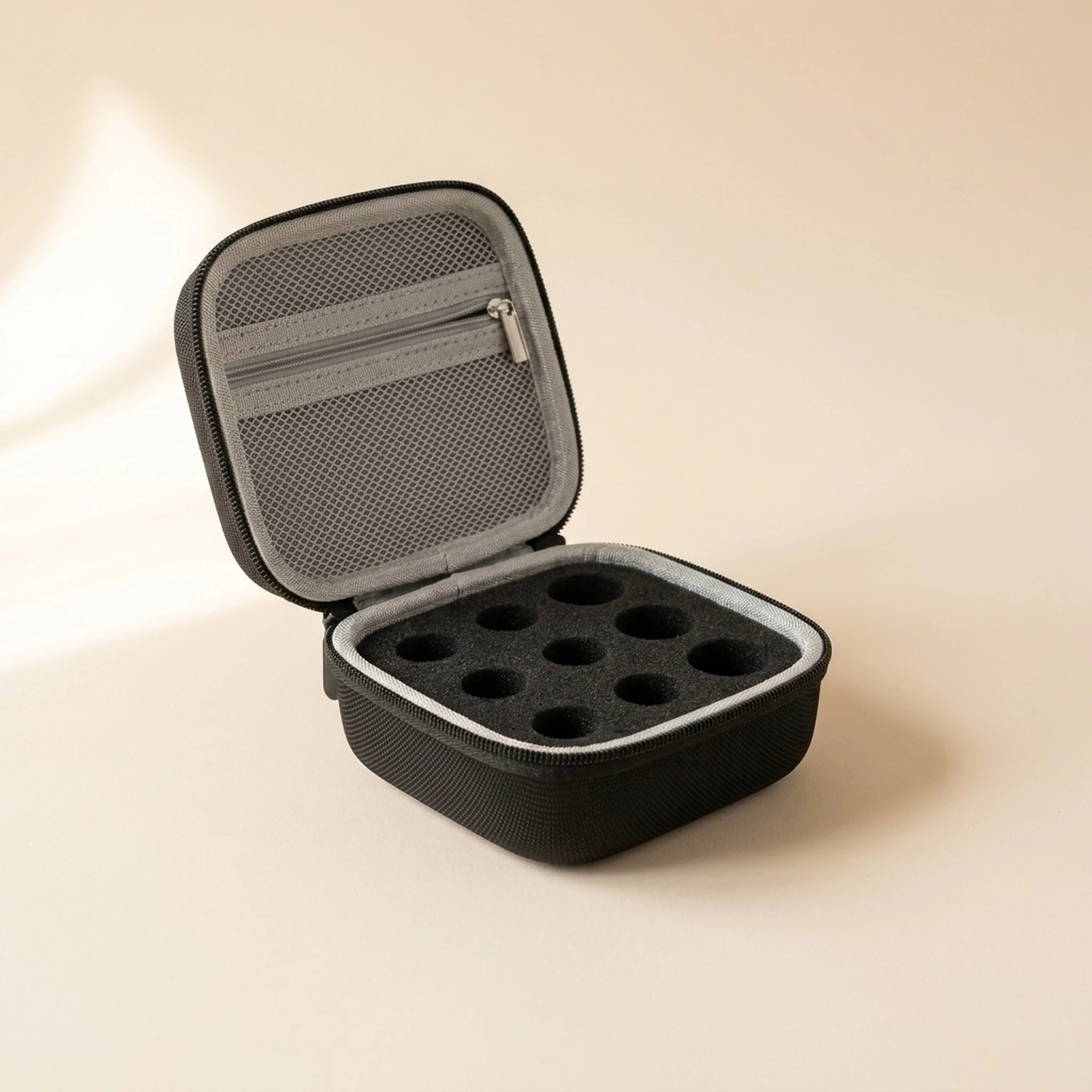
Pro Vial Case bundled with a fitted ice pack — save vs separate.

Fitted 90×60×15mm ice pack refill for the Pro Vial Cooler.
Related comparisons
BAC water vs sterile water
Preservatives, shelf life, and which to use for reconstitution.
Freezer vs fridge storage
When -20°C beats 2-8°C, and when it doesn't.
Vial case vs portable cooler
Choosing the right storage container for your workflow.
Frequently asked questions about peptide storage
Common questions from researchers · Updated May 2026
How do you store peptides?
Do peptides need refrigeration?
How long do reconstituted peptides last?
Can peptides be stored at room temperature?
Does light affect peptide stability?
Can you freeze reconstituted peptides?
How do I travel with peptides?
Can I fly with insulin or peptides?
How long can stay out of the fridge?
Do lyophilized peptides need to be refrigerated?
How can you tell if a peptide has gone bad?
What's the best refrigerator temperature for peptide storage?
How long do unopened lyophilized peptides last?
Continue reading
How to reconstitute peptides
Step-by-step technique for accurate measurement and proper dilution.
Reconstitution calculator
Calculate exact BAC water volumes for your reconstitution needs.
Travel kit builder
Generate a packing list for cold-chain peptide transit.