
Peptide Pen vs Insulin Syringe — Which is Right for Your Research?
Honest comparison: cost per injection (~2 SEK difference), dosing accuracy, convenience, and travel-friendliness. Plus which one actually fits your workflow.
Peptide research has two delivery formats: traditional insulin syringes (single-use, fixed needle) and reusable peptide pens (refillable cartridges, replaceable needles). Both work. The question is which one fits your workflow — and the cost difference is smaller than people assume.
The cost difference is ~2 SEK per injection.For someone investing in peptide research, that's negligible. The real decision is whether you value convenience, dosing precision, and travel-friendliness more than minimum cost.
If you're new to peptides, traveling often, running multi-peptide protocols, or you already hate handling small syringes — get a pen. If you only do occasional research, want minimum infrastructure, or already own syringes — stick with syringes.
This page explains why — with honest numbers, not marketing.
Here's how the two formats compare across the criteria that actually matter:
Side-by-side comparison
Here's how the two formats compare across the criteria that actually matter:
| Criterion | Insulin Syringe | Peptide Pen |
|---|---|---|
| Cost per injection | ~3.88 SEK | ~5.12 SEK (+1.24 SEK) |
| Initial cost | 299 SEK (100-pack 30G) | 1,249 SEK (Pen Starter Kit) |
| Dosing precision | Read tiny scale markings | Dial-a-dose, click-stop ✓ |
| Speed of injection | Manual draw + push | One-click delivery ✓ |
| Travel-friendly | Loose syringes raise eyebrows | Discreet, TSA-friendly ✓ |
| Reusable | Single-use only | Pen lasts years, refill cartridges ✓ |
| Sharps disposal | Full syringe each time | Only small needle ✓ |
| Multi-peptide stacking | Multiple syringes | One cartridge per peptide ✓ |
The honest takeaway:the pen wins on 6 of 8 criteria. The syringe wins on cost (barely) and initial investment. Whether 1.24 SEK per injection matters depends entirely on how you value your time and convenience.
People assume pens cost dramatically more. They don't. Here's the actual breakdown:
Syringe path
Total: ~3.88 SEK per injection
Pen path
Total: ~5.12 SEK per injection
Difference: ~1.24 SEK per injection.For 30 injections per month, that's ~37 SEK extra per monthfor pen convenience. Less than a coffee.
Worth noting:Disposable insulin pens (the kind from a pharmacy) cost €25-50 each and need replacement after every peptide cartridge. Our V3 Pen is reusable for years and refilled with our 349 SEK cartridge 10-packs. Compared to disposable pens, you save 60-70% over 2 years.
Ready to switch? Our Researcher Pen Starter Kit (1,249 SEK) includes everything: V3 Pen, 10 cartridges, 50 pen needles, plus prep accessories. The complete pen ecosystem, only available in EU through us.
Sticking with syringes? Our are premium quality, EU-stocked, and shipped same-day. The same supplier reliability as our pen ecosystem.
Are V3 Pen cartridges compatible with my existing pen (V1, V2)?
Yes. Our 3ml cartridges with 11mm long stopper fit V3, V2, V1, and most other peptide pen formats. Universal compatibility.
How long do peptides last in a filled cartridge?
Reconstituted peptides typically retain stability for 4-6 weeks at 2-8°C when properly stored. Refer to our for specifics by compound.
Can I reuse a cartridge?
Cartridges are designed as single-use for sterility. Reusing introduces contamination risk. Replace with a new sterile cartridge after each peptide cycle.
Where do you ship cartridges from?
All cartridges ship from our warehouse in Stockholm, Sweden. Same-day dispatch for orders placed before 14:00 CET. No customs delays, no shipping from China.
Are cartridges CE-marked and sterile?
Yes. Each cartridge is individually wrapped, sterilized, and CE-marked to comply with EU MDR regulations.
Are these cartridges available anywhere else in Europe?
To our knowledge, no other established EU distributor consistently stocks empty peptide pen cartridges in volume. Most EU researchers must import from US or China, which introduces shipping delays, customs paperwork, and quality risks. We solve that problem.
Storage essentials mentioned in this guide
CE-marked storage accessories from our catalog
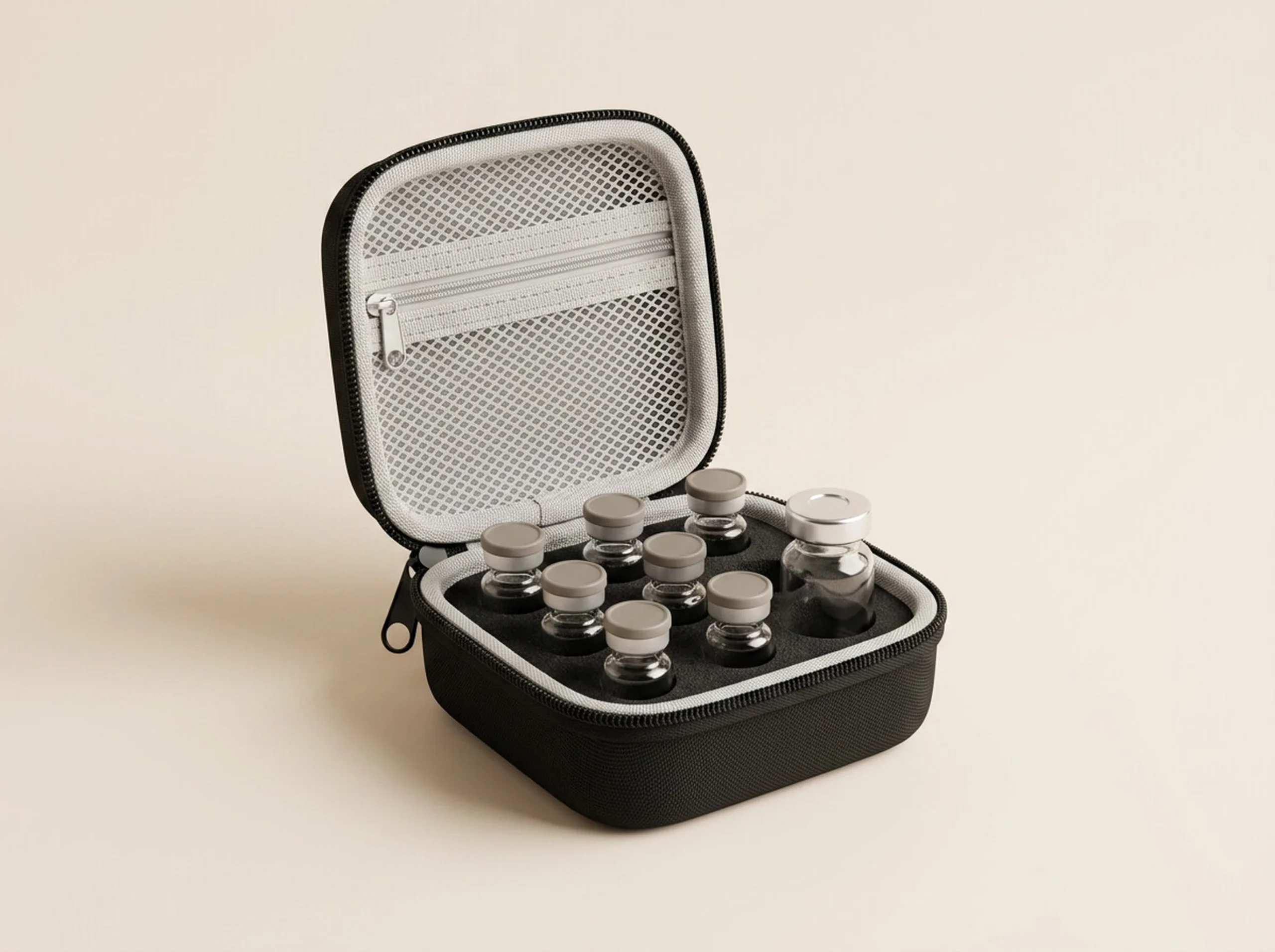
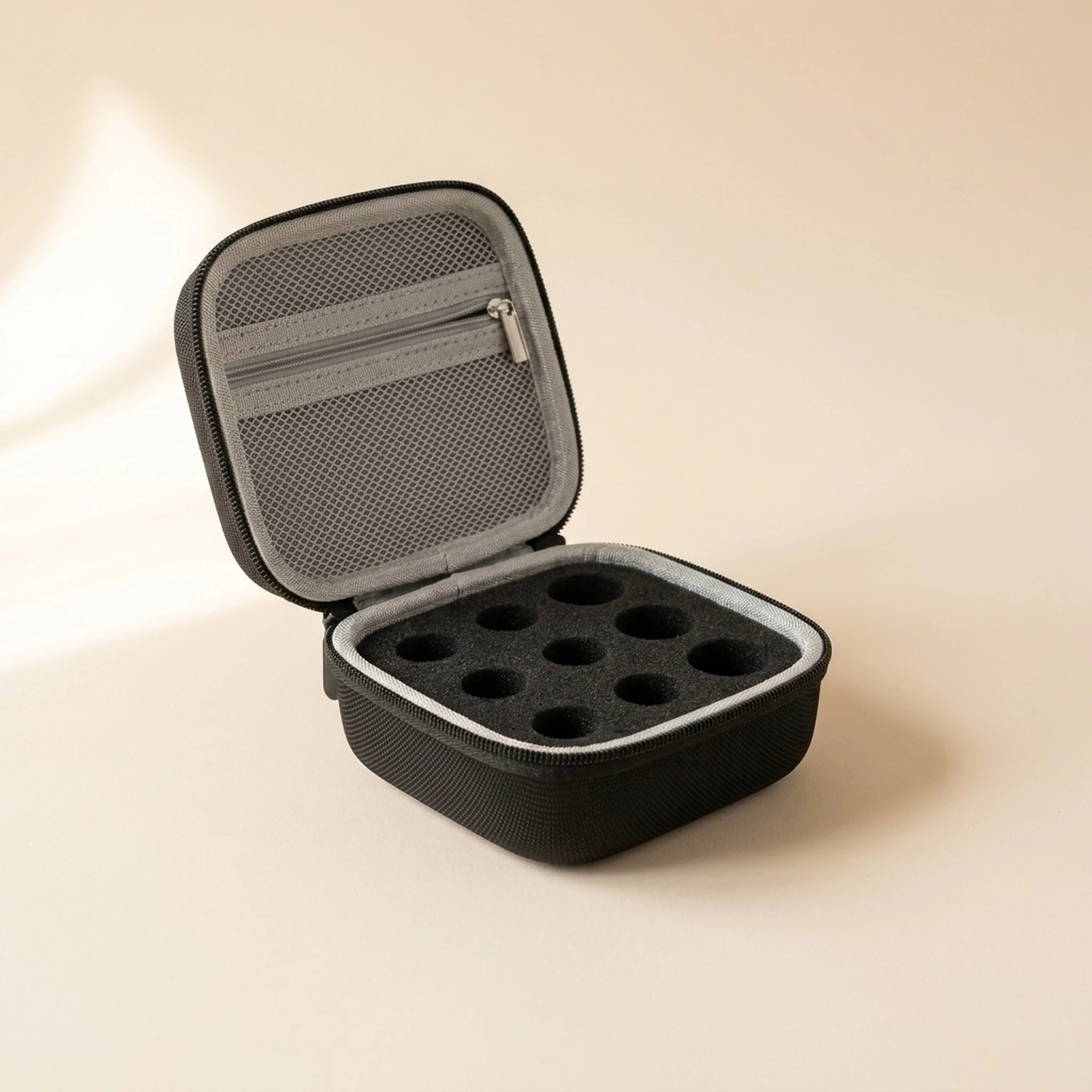
Pro Vial Case bundled with a fitted ice pack — save vs separate.

Fitted 90×60×15mm ice pack refill for the Pro Vial Cooler.
Related comparisons
BAC water vs sterile water
Preservatives, shelf life, and which to use for reconstitution.
Freezer vs fridge storage
When -20°C beats 2-8°C, and when it doesn't.
Vial case vs portable cooler
Choosing the right storage container for your workflow.
Frequently asked questions about peptide storage
Common questions from researchers · Updated May 2026
How do you store peptides?
Do peptides need refrigeration?
How long do reconstituted peptides last?
Can peptides be stored at room temperature?
Does light affect peptide stability?
Can you freeze reconstituted peptides?
How do I travel with peptides?
Can I fly with insulin or peptides?
How long can stay out of the fridge?
Do lyophilized peptides need to be refrigerated?
How can you tell if a peptide has gone bad?
What's the best refrigerator temperature for peptide storage?
How long do unopened lyophilized peptides last?
Continue reading
How to reconstitute peptides
Step-by-step technique for accurate measurement and proper dilution.
Reconstitution calculator
Calculate exact BAC water volumes for your reconstitution needs.
Travel kit builder
Generate a packing list for cold-chain peptide transit.