
30G vs 31G Insulin Syringes — Which Gauge for Peptide Research?
The 1G difference between 30G and 31G feels small on paper but matters in daily research. Here's when to choose which — with no marketing fluff.
Both 30G and 31G are insulin syringes with thin-walled needles, U-100 markings, and 0.5ml capacity. The only physical difference is the needle gauge: 31G is finer (0.26mm OD) than 30G (0.30mm OD). All reconstituted peptides are water-based solutions and flow through both gauges equally well — the choice is almost entirely about injection comfort.
For most peptide protocols, choose 31G. The finer needle is more comfortable and causes less scar tissue over repeated use. All reconstituted peptides are water-based solutions, so flow rate is essentially identical between 30G and 31G.
Choose 30G if. you're cost-sensitive (50 SEK less per 100-pack) or prefer the slightly stiffer needle for self-administration. Both work for any peptide protocol.
This page explains why — with honest numbers, not marketing.
Here's how the two formats compare across the criteria that actually matter:
Side-by-side comparison
Here's how the two formats compare across the criteria that actually matter:
| Criterion | 30G Insulin Syringe | 31G Insulin Syringe |
|---|---|---|
| Outer diameter | 0.30mm | 0.26mm (13% finer) |
| Needle length | 6mm (standard) | 6mm (standard) |
| Volume capacity | 0.5ml (U-100 markings) | 0.5ml (U-100 markings) |
| Injection comfort | Slightly more sensation | Smoother entry ✓ |
| Scar tissue (long-term daily use) | More noticeable | Less noticeable ✓ |
| Bend resistance | Slightly stiffer | Equivalent (thin-wall design) |
| Price (100-pack) | 299 SEK | 349 SEK |
The honest takeaway:31G wins on comfort, scar tissue, and modern thin-wall design. 30G wins on price. For most workflows, the 50 SEK difference per 100-pack is worth the comfort gain. Flow rate is identical for water-based peptide solutions.
- Cost-sensitive bulk research — 50 SEK cheaper per 100-pack
- Infrequent injection schedules — comfort difference matters less for occasional use
- Self-administration preference — slightly stiffer needle is easier to handle for some users
- Sensitive injection technique — marginally easier to penetrate firmer skin reliably
Sticking with syringes? Our are premium quality, EU-stocked, and shipped same-day. The same supplier reliability as our pen ecosystem.
Our hero insulin syringe.31G PRO with ultra-fine 6mm needle, 0.5ml U-100 capacity. ISO 13485 manufactured, EU-stocked, same-day dispatch from Stockholm.
Frequently asked questions
Can I switch between 30G and 31G mid-protocol?
Yes. There's no contraindication. Some researchers keep both in their kit — 31G for daily use and 30G for occasional injections where the 50 SEK savings adds up. Both gauges deliver identical doses with identical accuracy.
Does the gauge affect dosing accuracy?
No. Both use identical U-100 markings with 0.01ml graduations. Volume measurement is identical between 30G and 31G — only the needle gauge differs.
Are these the same as standard insulin syringes from a pharmacy?
Yes, manufactured to ISO 13485 medical device standards and CE-marked. Equivalent to brands like BD Ultra-Fine, but EU-stocked specifically for research workflows and sold without prescription.
What about 29G or 32G? Why don't you sell those?
29G is too thick for comfortable daily research injections. 32G is technically available in pen needle format but not in fixed-needle insulin syringe format — the manufacturing tolerances aren't reliable for thin-walled construction at that gauge. 30G and 31G cover the sweet spot for peptide research.
Will reconstituted peptides flow differently through 30G vs 31G?
Not noticeably. All reconstituted peptides are dissolved in BAC water and behave as water-thin solutions. Flow rate is essentially identical through both gauges. The choice between 30G and 31G is about injection comfort and price, not flow.
Looking for a pen instead?
If you're considering pens vs syringes more broadly, see our . Pens use 32G × 4mm pen needles which are even finer than 31G insulin syringes.
Storage essentials mentioned in this guide
CE-marked storage accessories from our catalog
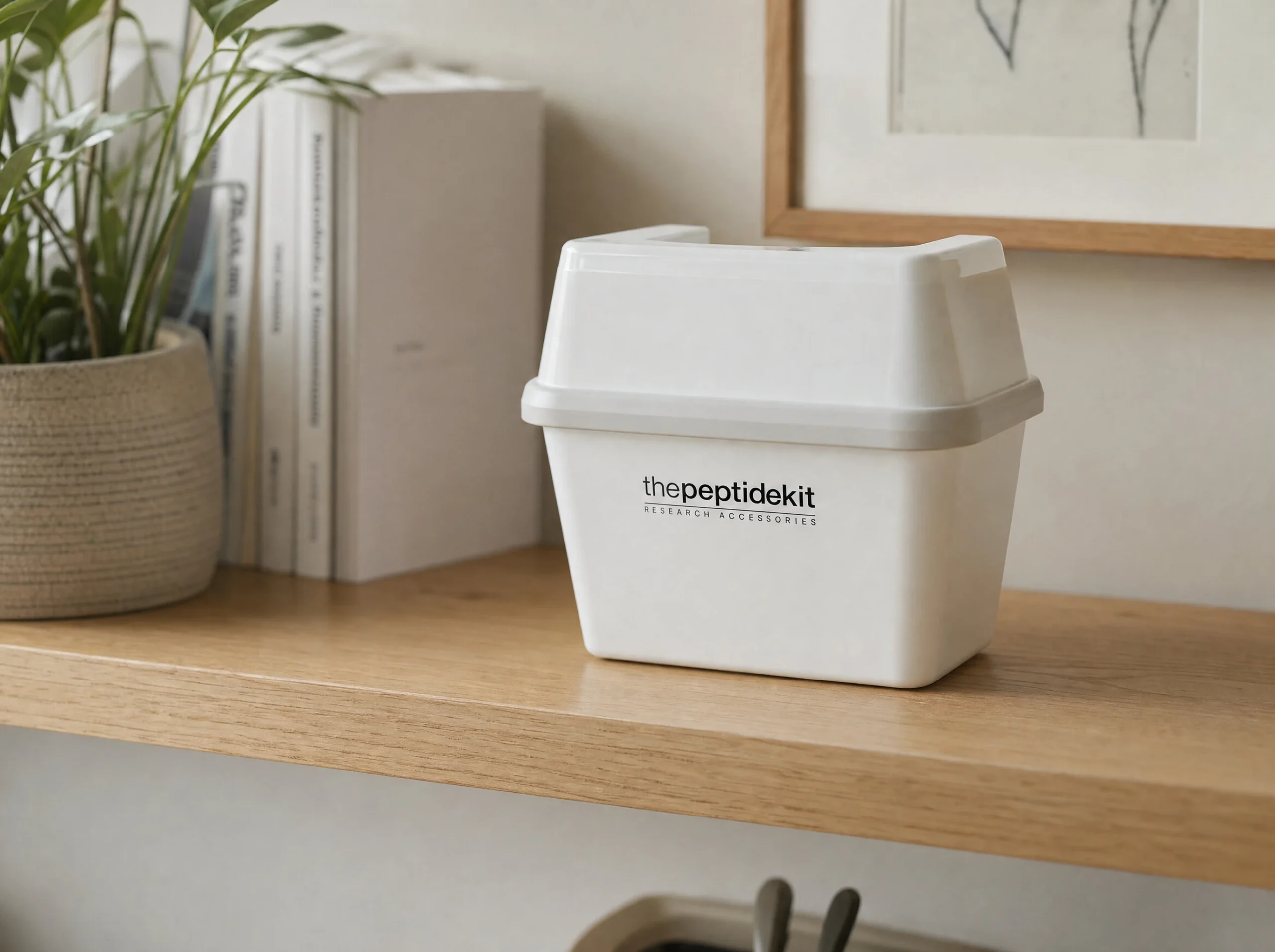
2-litre white sharps container with secure rotating lid.
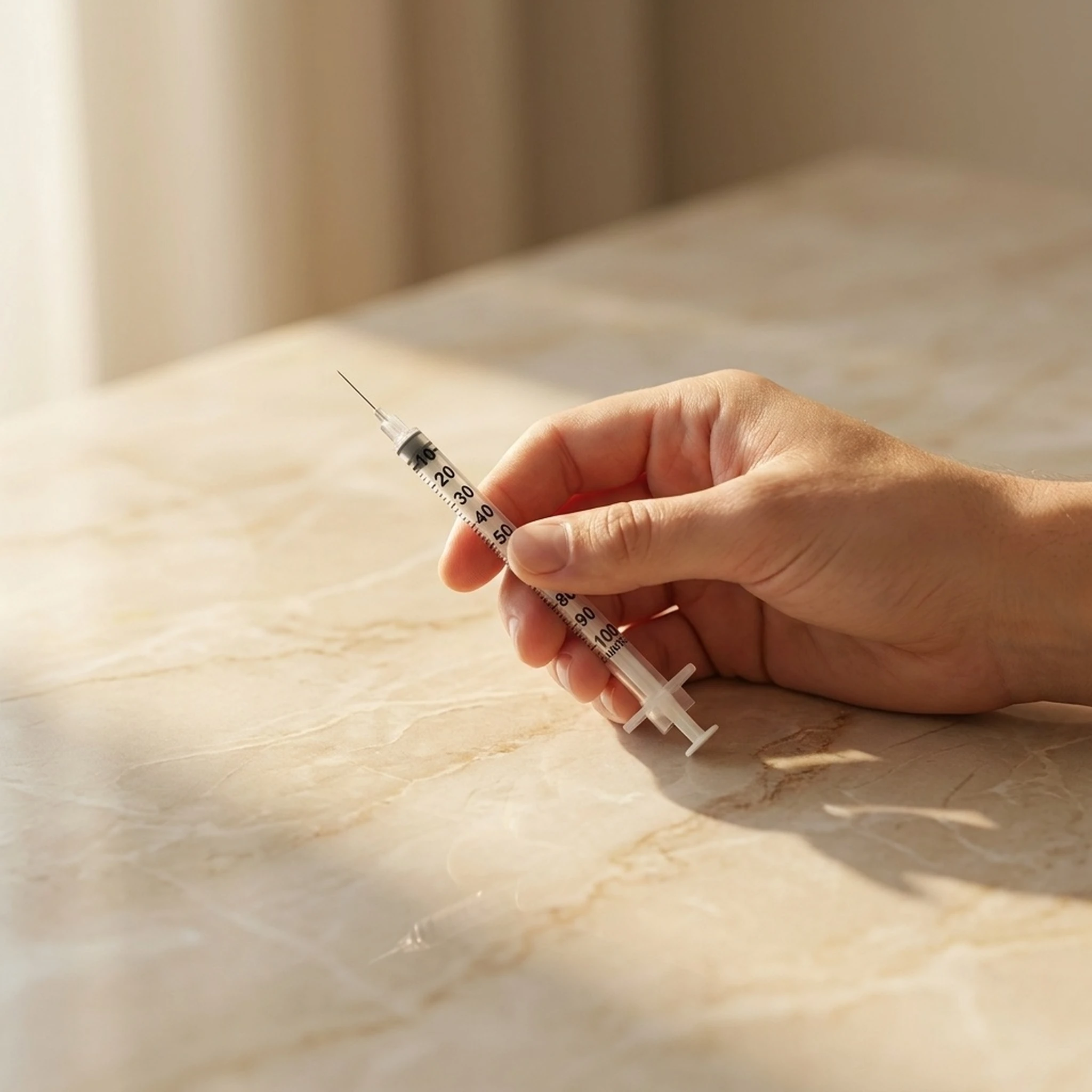
Our finest fixed-needle syringe — 31G PRO × 8mm, 0.5ml. The comfort choice.
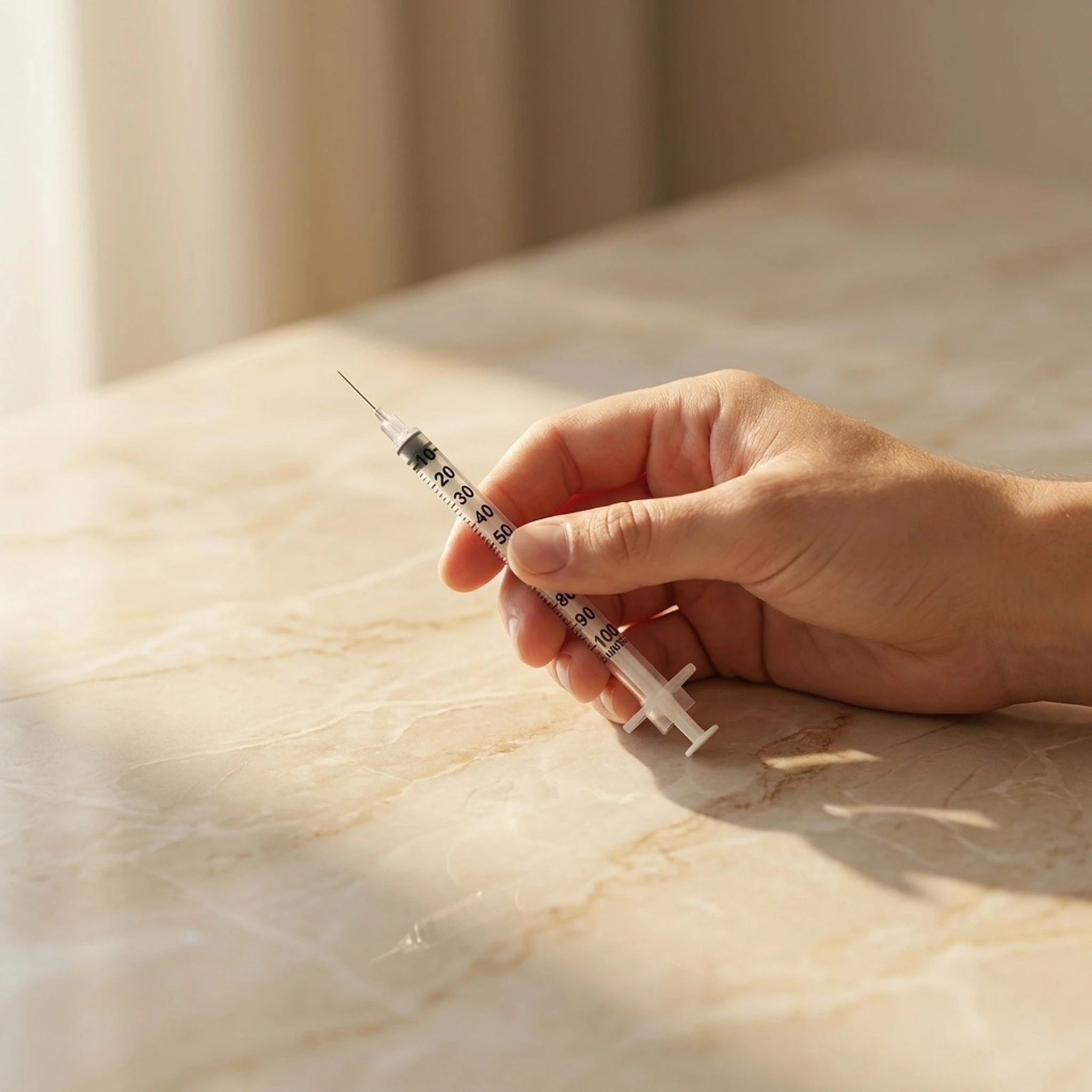
Sterile 0.5ml fixed-needle insulin syringe, 30G × 8mm. U-100 graduation.
Related comparisons
BAC water vs sterile water
Preservatives, shelf life, and which to use for reconstitution.
Freezer vs fridge storage
When -20°C beats 2-8°C, and when it doesn't.
Vial case vs portable cooler
Choosing the right storage container for your workflow.
Frequently asked questions about peptide storage
Common questions from researchers · Updated May 2026
How do you store peptides?
Do peptides need refrigeration?
How long do reconstituted peptides last?
Can peptides be stored at room temperature?
Does light affect peptide stability?
Can you freeze reconstituted peptides?
How do I travel with peptides?
Can I fly with insulin or peptides?
How long can stay out of the fridge?
Do lyophilized peptides need to be refrigerated?
How can you tell if a peptide has gone bad?
What's the best refrigerator temperature for peptide storage?
How long do unopened lyophilized peptides last?
Continue reading
How to reconstitute peptides
Step-by-step technique for accurate measurement and proper dilution.
Reconstitution calculator
Calculate exact BAC water volumes for your reconstitution needs.
Travel kit builder
Generate a packing list for cold-chain peptide transit.